Free template · Word and PDF
Termination letter template: three versions, each with a filled-in example
A termination letter confirms in writing what you said in the meeting: the end date, the one reason, final pay, benefits, property, unemployment and references. Here are three, from the Firm & Fair Paper Trail, in Word and PDF, each with a filled-in example: performance, conduct, and position eliminated. Keep it short, and make it match what you say in the room.
What’s on it
- The opening: “This letter confirms what we discussed today,” and the date the job ends. The position-eliminated letter says instead that the position is being eliminated, and gives the last day of work.
- The reason, performance version: two to four sentences of fact: the standard, the steps you took and when, and the result. Dates and numbers, no labels or opinions.
- The reason, conduct version: what happened, with dates and times, how you checked it, and when you heard their side. Then the rule and when they received it, and earlier warnings on the same issue, or “None” for a single serious act. Describe acts, not character: “the register video shows”, not “you stole”.
- The reason, position eliminated: the business change in plain words, with numbers if you have them, about the job and not the person. Only if it’s true: “It doesn’t reflect a problem with your work.” Then notice and severance: paid through a date, an amount offered, or none.
- Final pay: the hours it covers, any unused paid time off your state or your policy requires you to pay out, and when and how it’s paid. Check your state’s rules first.
- Benefits: the date coverage ends and who will send information about continuing it, who to contact about a retirement account, or a box for no benefits that end with the job.
- Company property: what to return and by when, or the Return of Property List attached. The performance and conduct letters also say when they’ll get their personal items.
- Unemployment and references: they may apply with your state’s unemployment agency, and the state decides who qualifies. If you’re asked for a reference, you confirm their dates of employment and job title.
- The closing, by version: the performance letter has an optional “Thank you for the work you did here,” only if it’s true. The position-eliminated letter thanks them for something specific and true, and can add that they’re welcome to apply if a job opens that fits their experience, only if you mean it. Don’t promise to rehire. The conduct letter has no closing.
- Questions and signatures: who to contact, your signature, and theirs, which acknowledges receipt, not agreement. A box for “declined to sign”, with a witness, and the date by which they can add written comments to their file.
See it before you download it
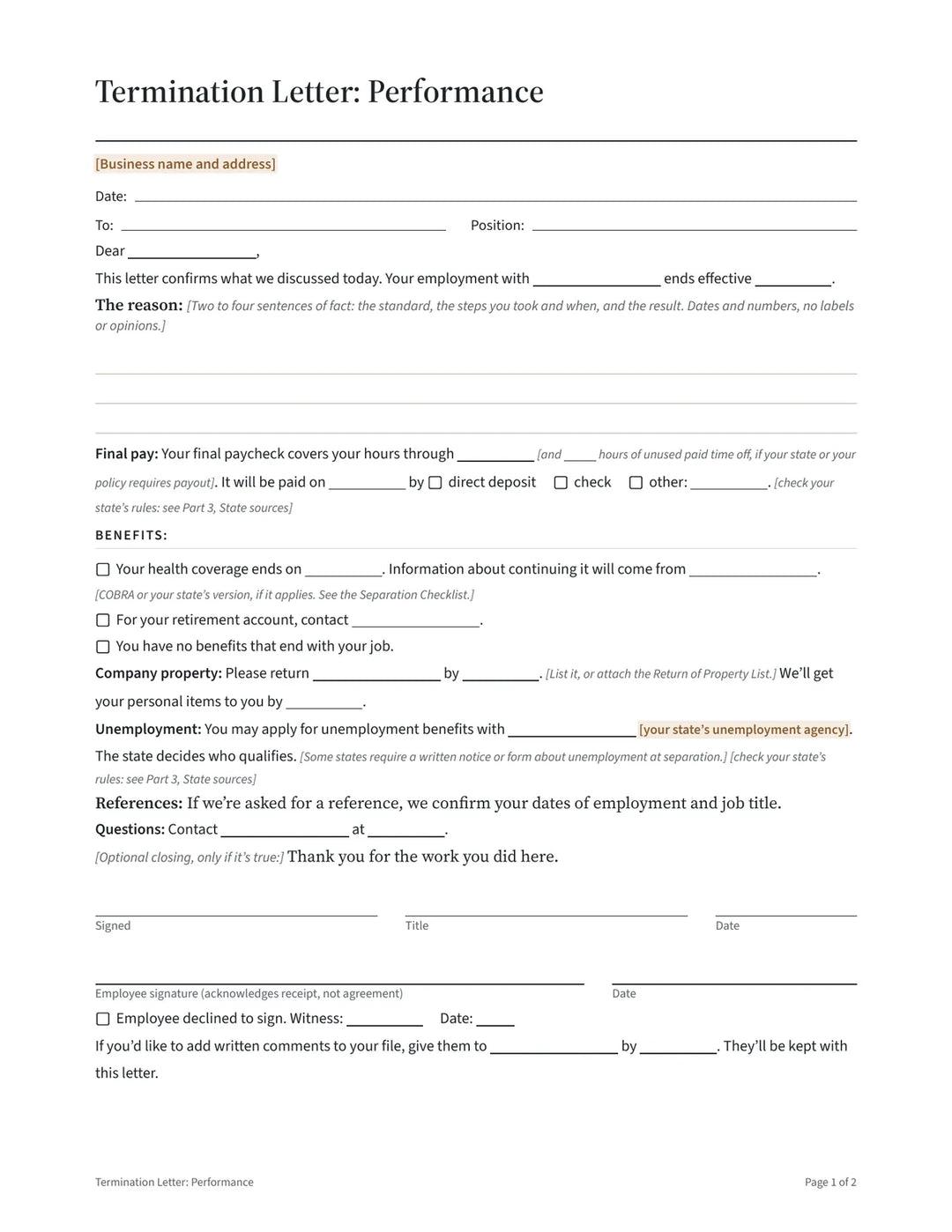
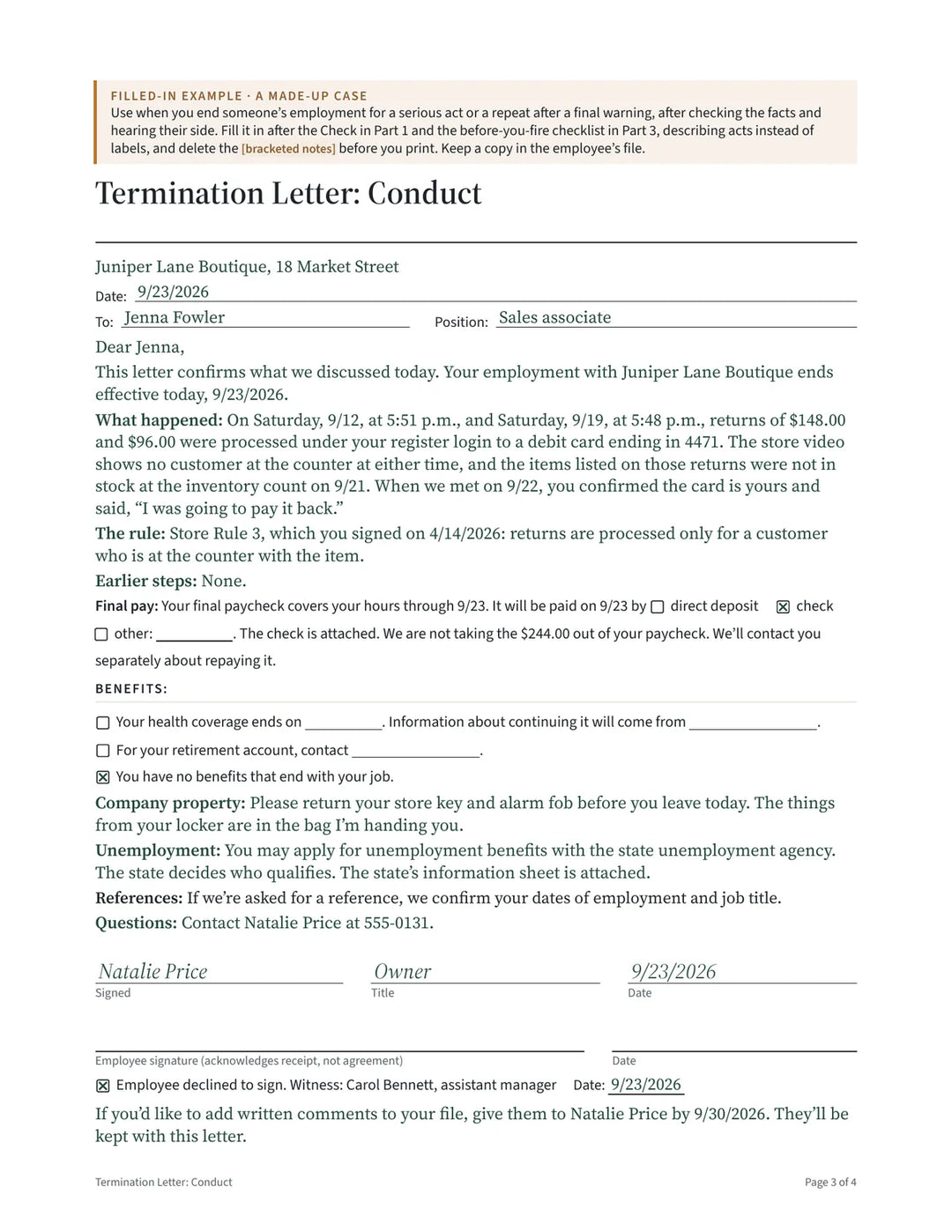
Real pages from the file. The example is a made-up case. Template for small businesses. Not legal advice. Review against your state and local law before using it.
How to use it
- Performance: when someone hasn’t met a clear standard after the steps you took, usually a performance plan or a final warning. What to say in that meeting, word for word: what to say when firing someone.
- Conduct: for a serious act, or a repeat after a final warning, once you’ve checked the facts and heard their side. Never in the heat of the moment: if you can’t check it today, send them home with pay and look into it. The meeting: how to fire someone for gross misconduct.
- Position eliminated: when the job itself is going away for a business reason, such as less work or a change in how you operate. If you’d hire someone into the same seat within a few months, it isn’t a layoff. The meeting: how to let an employee go due to lack of work.
- Before you write it, run the Check below, fresh, then the Playbook’s before-you-fire checks: the reason in one sentence, who else did the same thing and what happened to them, final pay ready. Any yes, even a maybe, stop and get advice before you schedule the meeting. A layoff, or any time you’re choosing who goes, is a reason on its own to get advice first.
- One reason, the documented one, in the same words you’ll use in the room and later with the state. One reason in the letter and another later on is the kind of mismatch that causes trouble.
- Hand it over in the meeting, two copies on the table. They sign for receipt, not agreement. If they won’t, check “declined to sign” and have your witness sign. Keep a copy in their file, then work the termination checklist line by line.
- Keep releases out of it. If you offer severance in exchange for a signed release, an employment attorney writes that agreement. With 20 or more employees, federal age law adds its own rules for a release from anyone 40 or over. Nobody signs one in the meeting, and final pay never waits on a signature.
Before any write-up or firing: the Check
Trouble often starts with something reasonable done at the wrong moment: a write-up the week after a complaint, a firing right after a request for time off. The Playbook has you run the Check first.
Before you act, has any of this happened?
- They complained about something at work recently.
- They asked for time off, or for a change in how or when they work.
- They told you about something personal that may need time off or a change at work.
- There’s a workers’ comp claim.
- They were a witness in someone else’s complaint.
- They’ve talked with coworkers about pay or working conditions.
- The timing could look like payback.
- It’s a layoff, and you’re choosing someone 40 or older.
- Someone could believe the real reason is a different one.
Any yes: stop, and get advice before the next step.
A tip from the Playbook: many business insurance policies include an HR or legal helpline. Find out whether yours does now, before you need it.

The Firm & Fair Playbook
This form is half of it. The other half is the conversation: what to say when they push back, what never to say, and when to stop and get advice first.
32 conversations, word for word, 18 templates with a filled-in example each, and Quick Cards for your phone.
$97 once. Instant download. 30-day refund, and you keep the files.
See what’s insideQuestions owners ask
What should a termination letter include?
The date the job ends and one reason in plain facts; final pay, with what it covers and when and how it’s paid; the date coverage ends, if they have benefits; what to return; that they may apply for unemployment and the state decides; your reference policy; and who to contact with questions. Keep it short and matching what you say in the room. Leave out labels, opinions, a second reason, and any promise about a reference or a rehire.
Should a termination letter give the reason?
Yes, one: the documented one, in a few sentences of fact. For performance, the standard, the steps and the result. For conduct, what happened, how you checked it, and the rule. For a position eliminated, the business change, about the job and not the person. Nothing else goes in. “Honestly, the numbers were just the last straw” says there were other reasons, and anyone who reads your file later will want to hear them.
Can I take money they owe out of the final paycheck?
Don’t hold the paycheck or take it out. Get advice about recovering the money, and say so in the letter, as the conduct example does: “We are not taking the $244.00 out of your paycheck. We’ll contact you separately about repaying it.” Unreturned property works the same way: get it back separately, and don’t deduct anything for it until you’ve checked your state’s rules. Final pay has its own due date, and in some states it’s the moment the job ends.
What should the letter say about references?
All three say the same thing: “If we’re asked for a reference, we confirm your dates of employment and job title.” That’s a common practice, a neutral reference, and it leaves out even “eligible for rehire”. Give the same answer for everyone, your best people included, and send every reference call to one person. In the meeting, don’t promise a good reference. Tell them what the policy is.
Related
- Letting someone go for performance The plan ended and the numbers didn’t move. A short, decided, kind meeting.
- Employee termination checklist The steps of a departure on one list, from final pay and notices to keys and logins.
- Final written warning template The last step before the end of the job, in Word and PDF, with a filled-in example.
- Employee departure announcement The short note that tells your team who’s leaving and who covers what, with no reasons.
Free
Get the termination letter template
The Word file to fill in and the PDF, each with the blank form and a filled-in example. We’ll also send Script 1 from the Playbook, the complete first conversation, word for word.
Not legal advice. Practical wording and process guidance for business owners, written for workplaces in the United States. For a specific situation, talk to an employment attorney licensed in your state.