Free template · Word and PDF
Employee write-up form, with a filled-in example
A write-up records one problem: what happened, the rule it breaks, the earlier steps, what has to change by when, and what happens if it doesn’t. This one is the Written Warning from the Firm & Fair Paper Trail, in Word and PDF, with a note in each part on what to write and a filled-in example. Fill it in before the meeting, give the employee a copy, and keep one in their file.
What’s on it
- The basics: the business, the employee’s name and position, the date, and who issues it.
- The issue: attendance, conduct, performance, safety or other. One issue per warning; a second problem gets its own form.
- What happened: dates, times, places and what you saw or checked. Facts, not labels: “unclipped on the ridge for about 5 minutes”, not “careless”.
- The rule or expectation: the written policy, checklist or instruction, and when they received it.
- Earlier steps on this issue: for example “Conversation Record, 8/27/2026”. If this is the first step, write “None” and say why you’re starting with a written warning.
- What has to change, starting when, and the help you’ll give.
- If it happens again: the next step, said plainly. Usually a final written warning; for a serious repeat, ending employment.
- An optional line, if it fits how you work: “Our discipline steps are a guide. For a serious problem, we may skip steps.”
- A review date, and the signatures: yours, and theirs, which acknowledges receipt, not agreement. A box for “declined to sign”, with a witness, and room for the employee’s comments.
See it before you download it
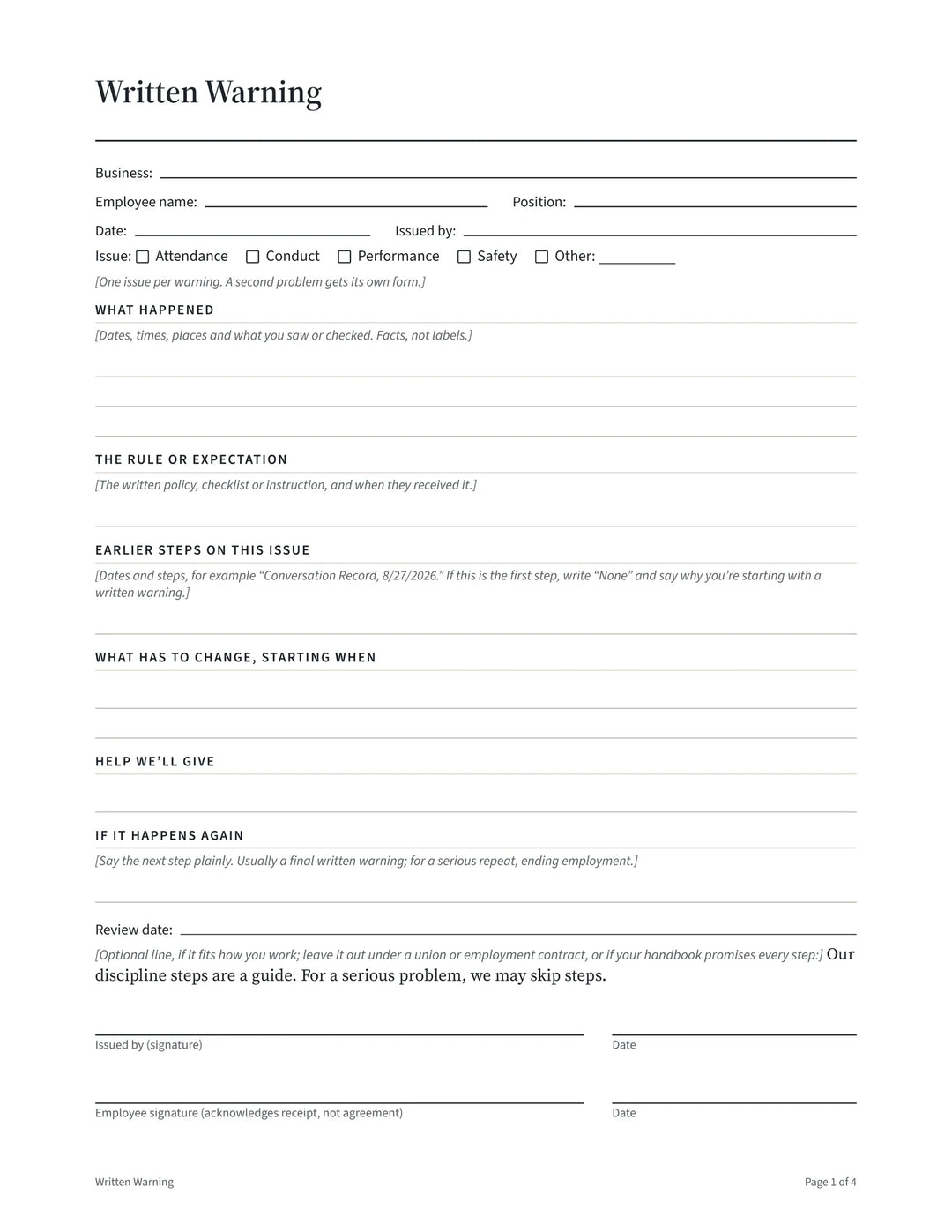
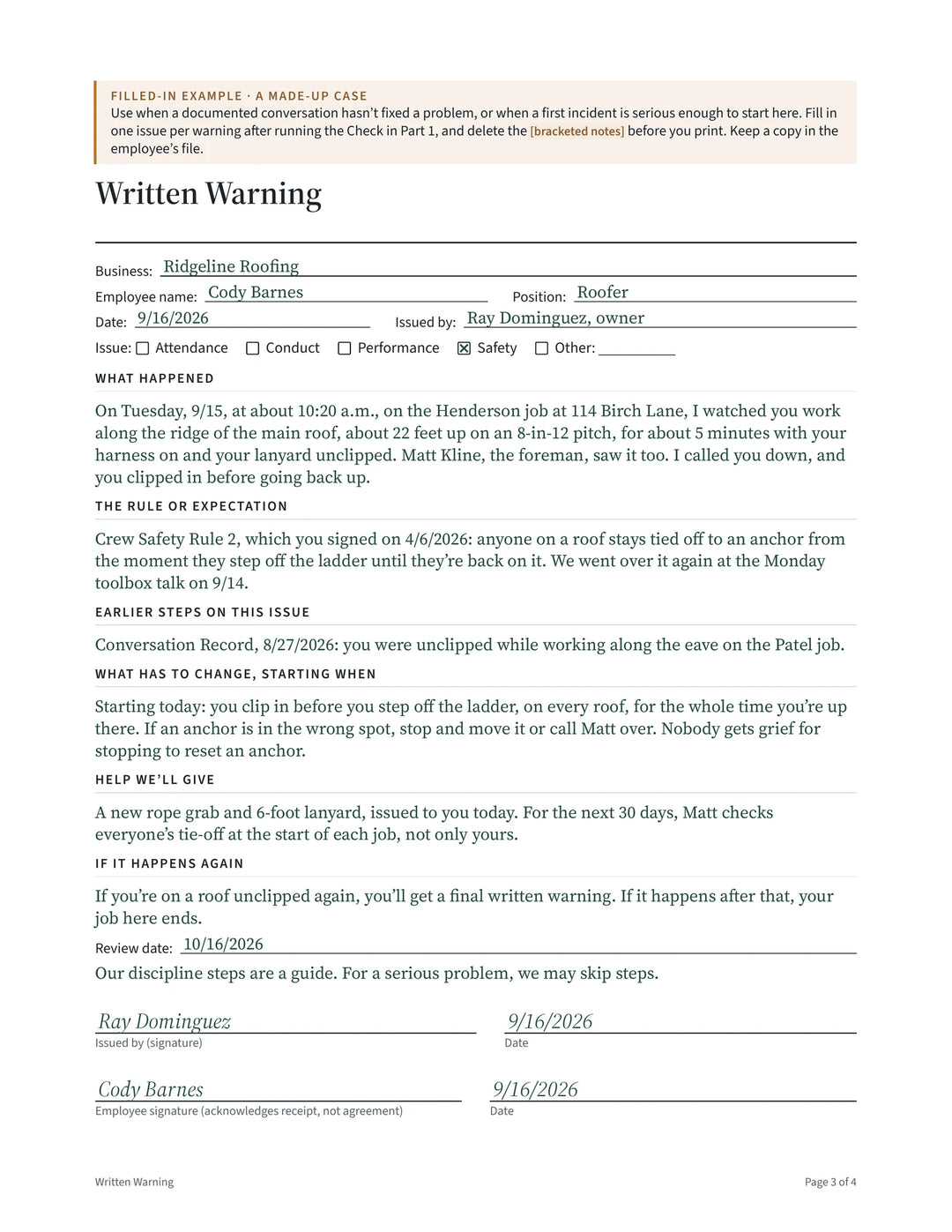
Real pages from the file. The example is a made-up case. Template for small businesses. Not legal advice. Review against your state and local law before using it.
How to use it
- Before you fill it in, run the Check below. A write-up the week after a complaint, or right after a request for time off, is the moment to stop and get advice first.
- Write it before the meeting, in plain words, from your notes: the attendance log, the conversation record, what you saw.
- Hold the meeting in private, with a witness if you have one, and go through the form with them. The form is the record, but one wrong line in the room can turn a clean warning into a fight. What to say, line by line, and what to say when they push back: how to write up an employee.
- Ask them to sign, for receipt, not agreement. If they won’t, check the box, have a witness initial it, and move on. Offer them the comments section.
- Same day: a copy to them, a copy in their file, and the review date in your calendar.
Before any write-up or firing: the Check
Trouble often starts with something reasonable done at the wrong moment: a write-up the week after a complaint, a firing right after a request for time off. The Playbook has you run the Check first.
Before you act, has any of this happened?
- They complained about something at work recently.
- They asked for time off, or for a change in how or when they work.
- They told you about something personal that may need time off or a change at work.
- There’s a workers’ comp claim.
- They were a witness in someone else’s complaint.
- They’ve talked with coworkers about pay or working conditions.
- The timing could look like payback.
- It’s a layoff, and you’re choosing someone 40 or older.
- Someone could believe the real reason is a different one.
Any yes: stop, and get advice before the next step.
A tip from the Playbook: many business insurance policies include an HR or legal helpline. Find out whether yours does now, before you need it.

The Firm & Fair Playbook
This form is half of it. The other half is the conversation: what to say when they push back, what never to say, and when to stop and get advice first.
32 conversations, word for word, 18 templates with a filled-in example each, and Quick Cards for your phone.
$97 once. Instant download. 30-day refund, and you keep the files.
See what’s insideQuestions owners ask
Does an employee have to sign a write-up?
You ask them to sign to show they received it, not that they agree, and the form says so on the signature line. If they still won’t sign, check “declined to sign”, have a witness initial it with the date, and offer them the comments section. The warning stands either way.
What should a written warning include?
One issue, described as facts with dates; the rule or expectation and when they got it; the earlier steps on the same issue; what has to change and by when; the help you’ll give; what happens if it happens again; and a review date. A warning that says “bad attitude” and nothing else is a label, not a record.
Can I give a written warning without a verbal warning first?
Usually the path starts with a coaching talk and a documented conversation, the verbal warning you write down the same day. A first incident that’s serious enough, such as a safety violation that put someone in real danger, can start at the written warning: write “None” under earlier steps and say why you’re starting there. Run the Check first.
Related
- The written warning meeting The documented talk didn’t fix it. Now it’s a written warning.
- Verbal warning template The record of a documented conversation, in Word and PDF, with a filled-in example.
- Final written warning template The last step before the end of the job, in Word and PDF, with a filled-in example.
- Attendance log Late arrivals and absences by date, so a write-up rests on a record, not memory.
- When they say “lawyer” or “labor board” It’s a right, not a threat. What to say in the moment, and what to do next.
Free
Get the employee write-up form
The Word file to fill in and the PDF, each with the blank form and a filled-in example. We’ll also send Script 1 from the Playbook, the complete first conversation, word for word.
Not legal advice. Practical wording and process guidance for business owners, written for workplaces in the United States. For a specific situation, talk to an employment attorney licensed in your state.